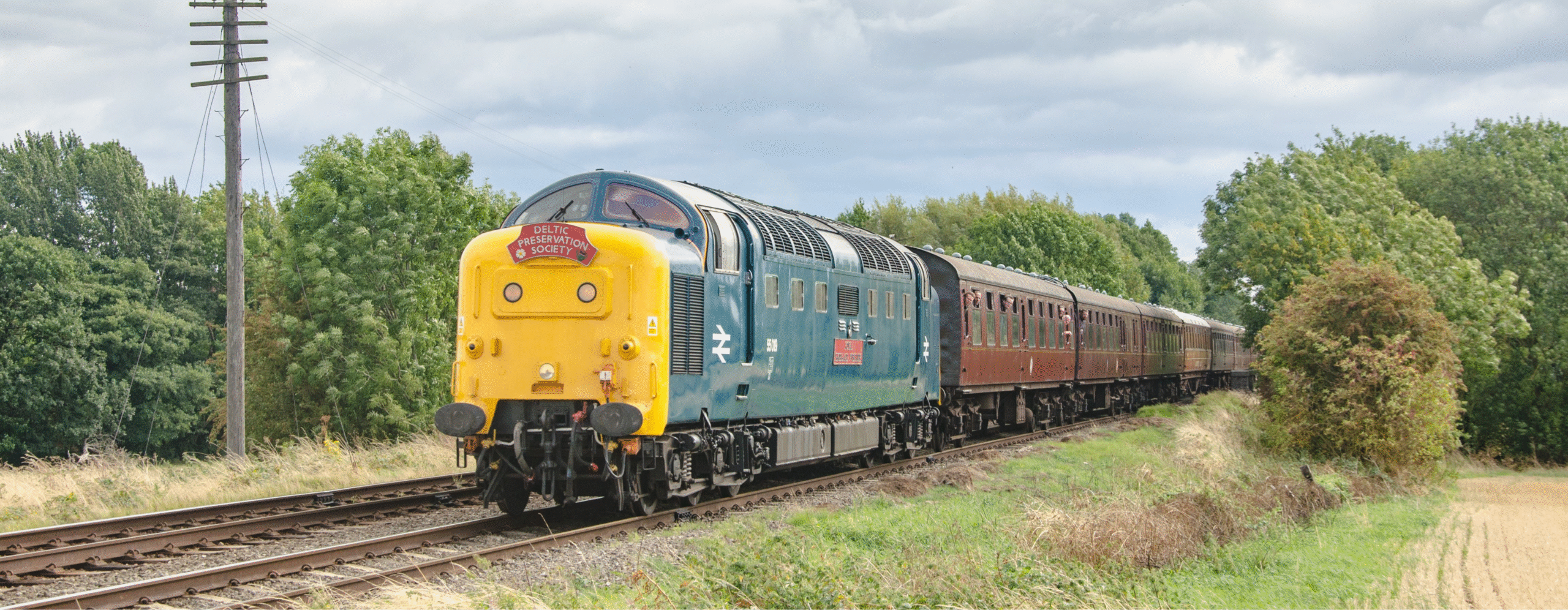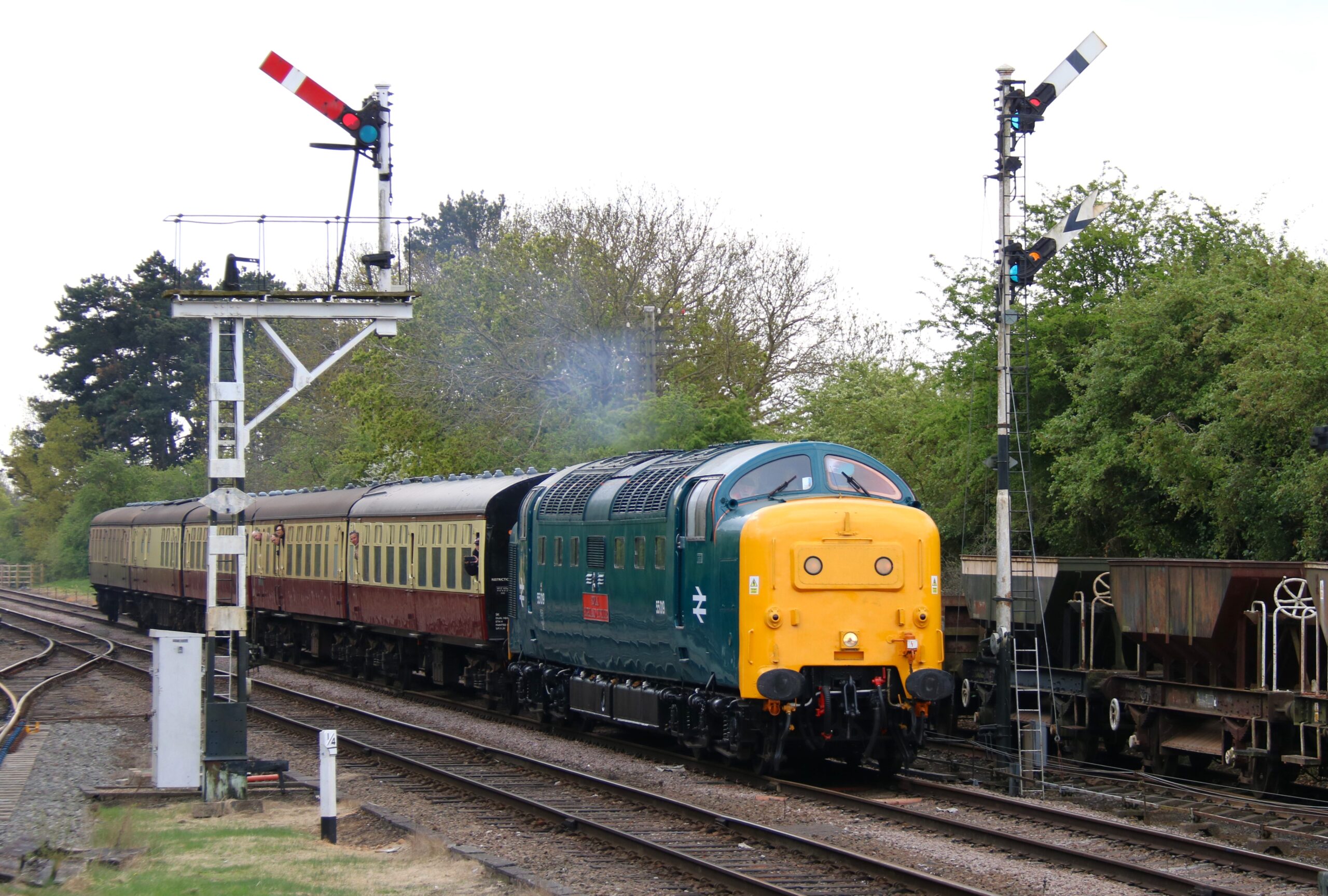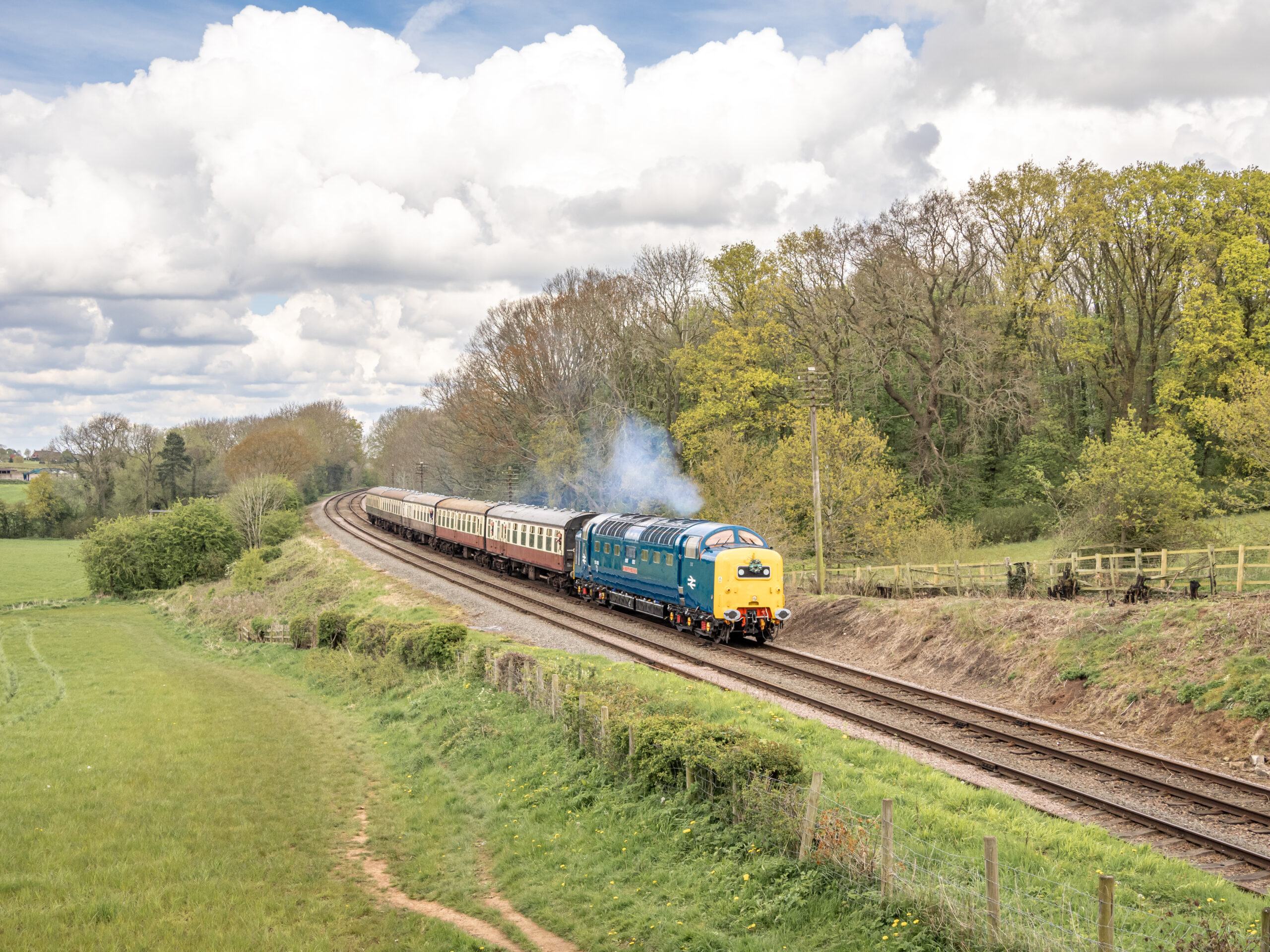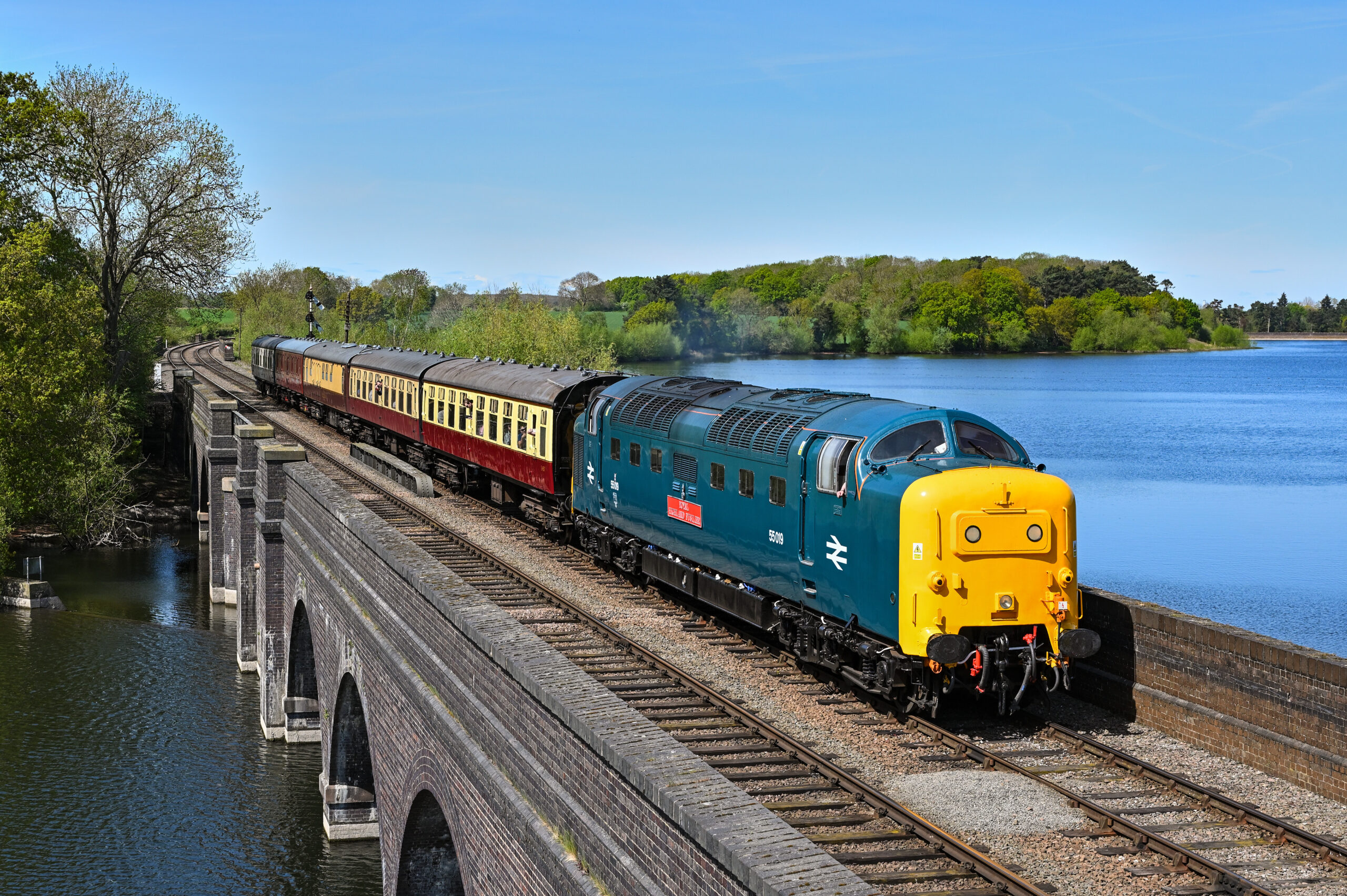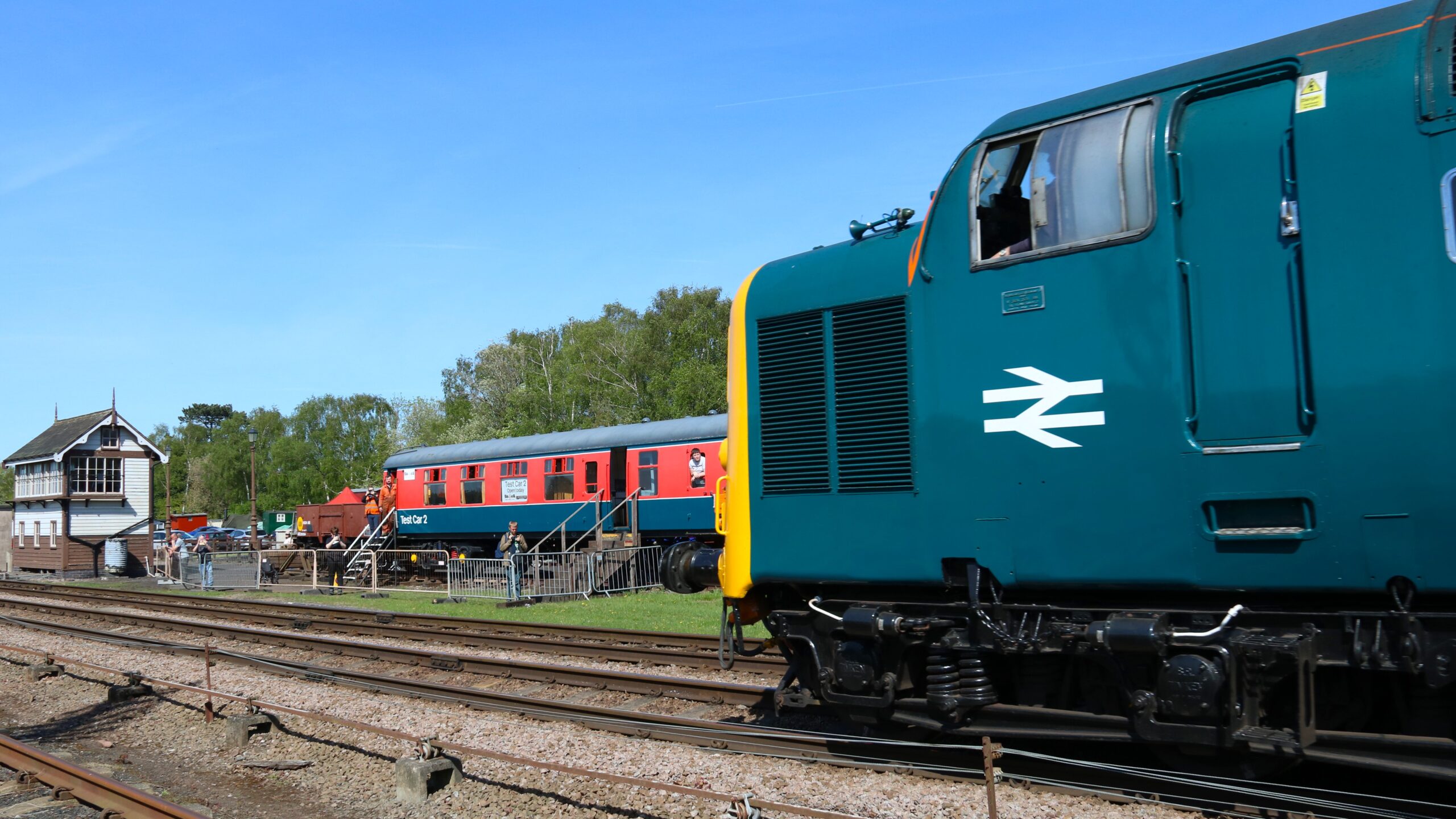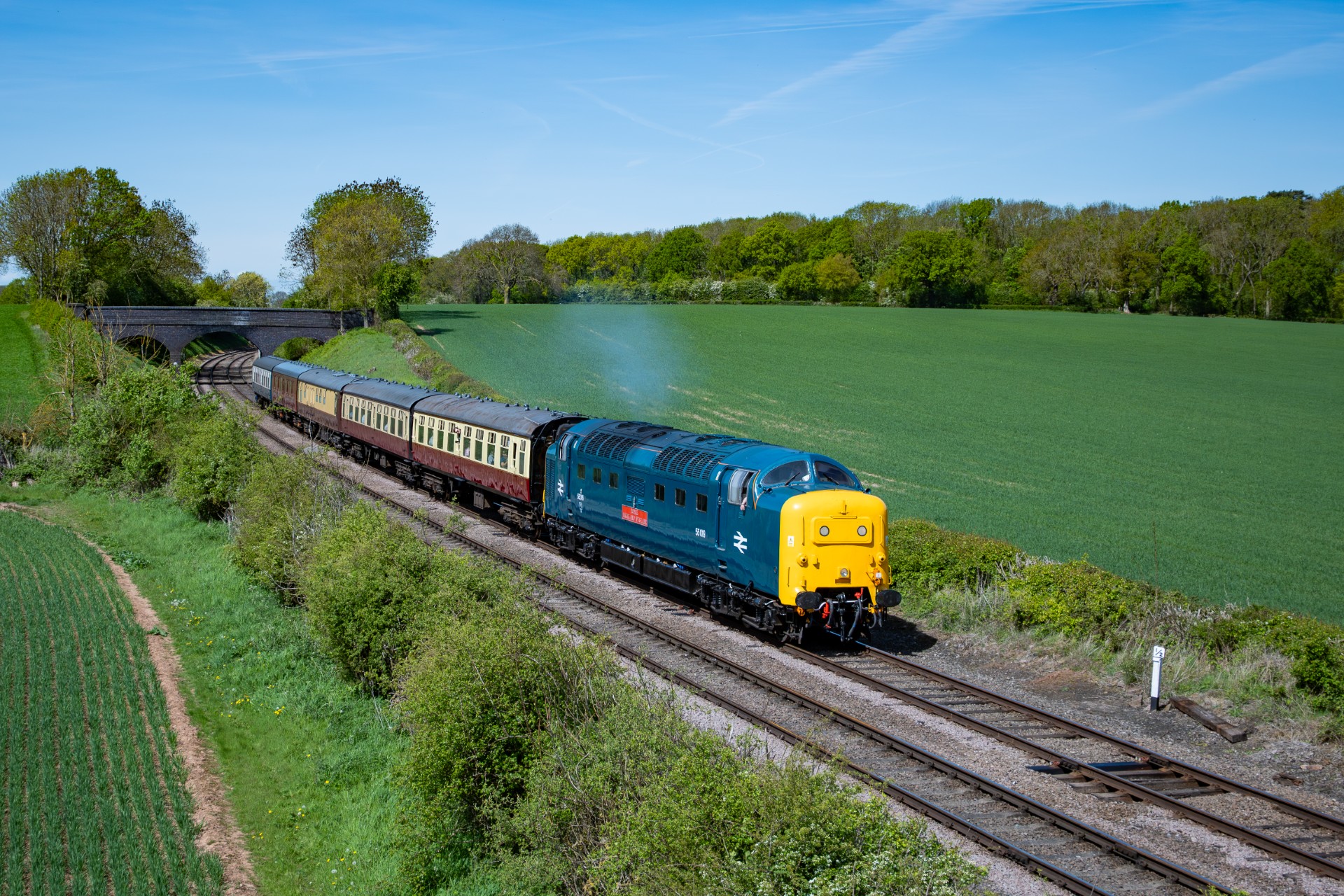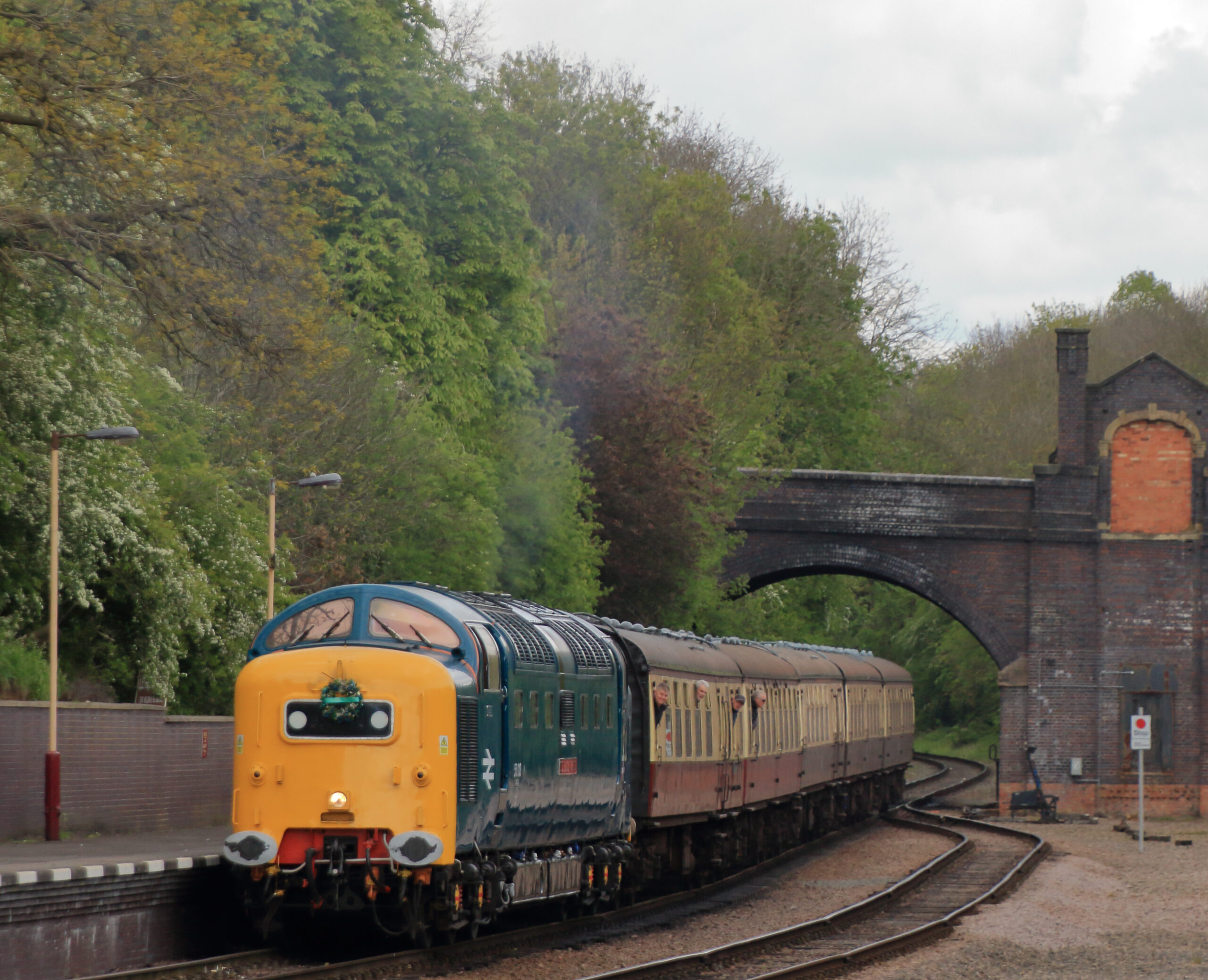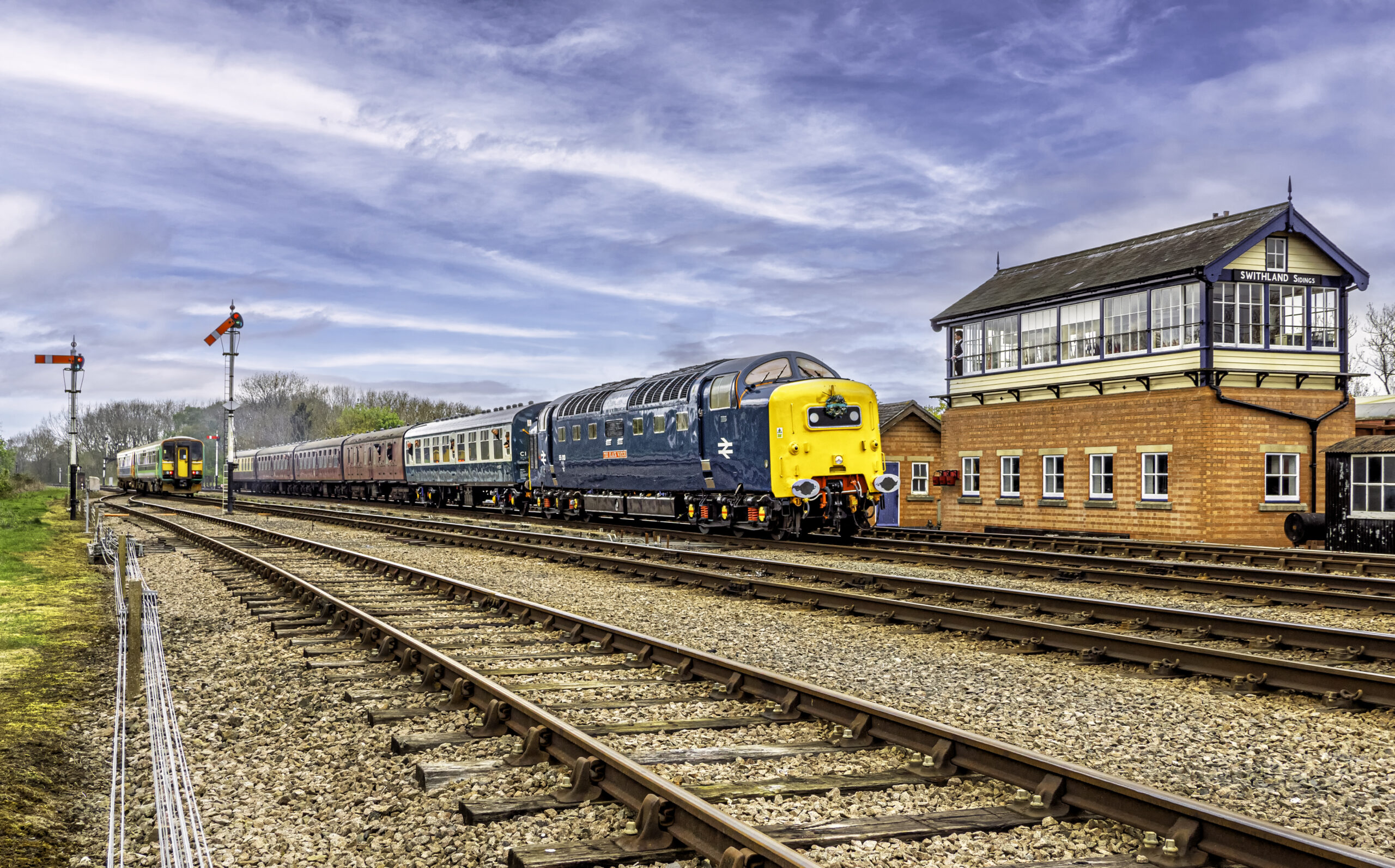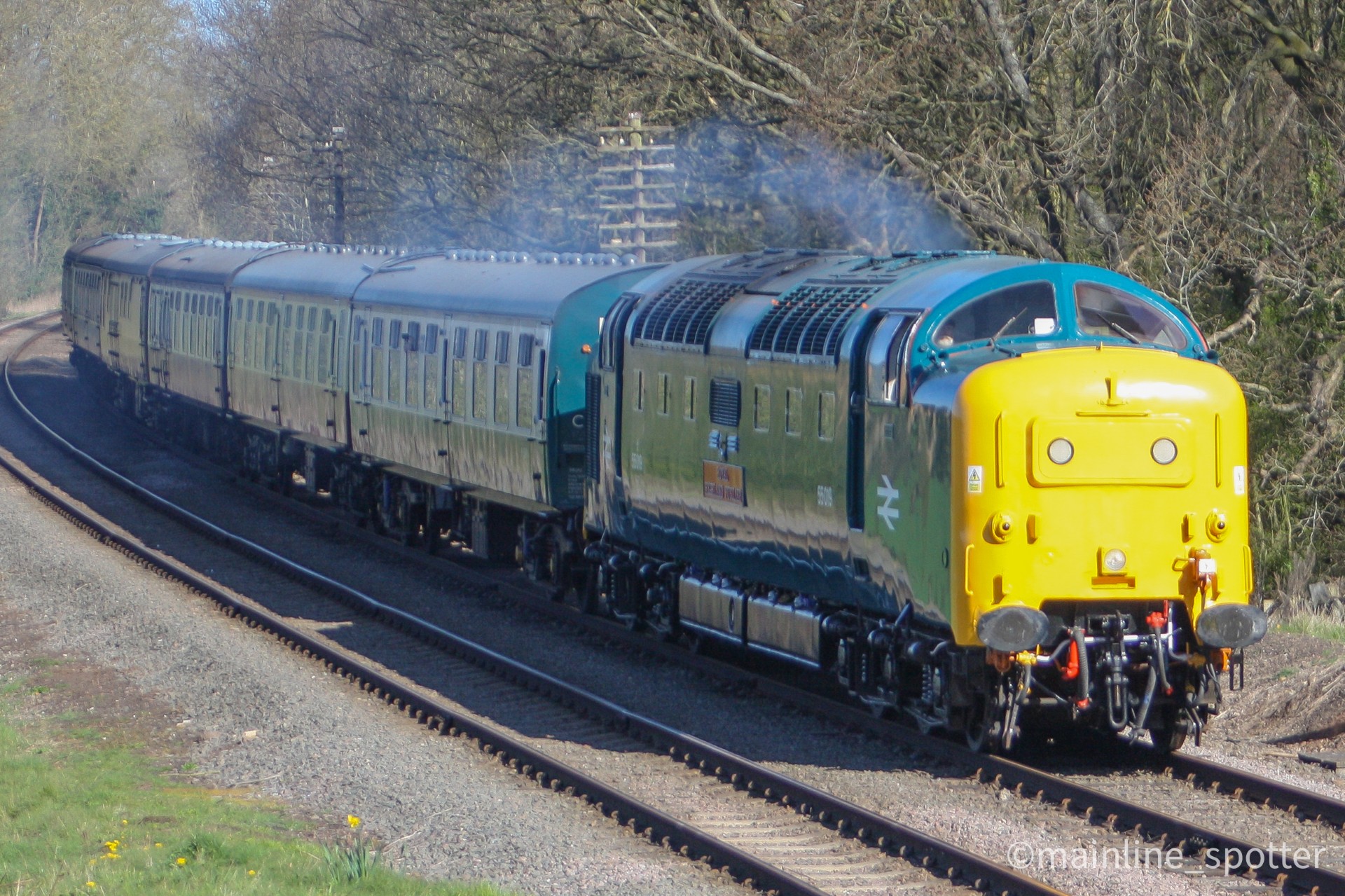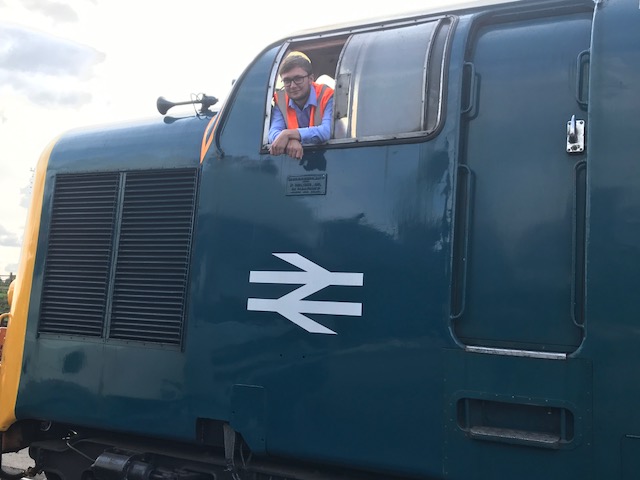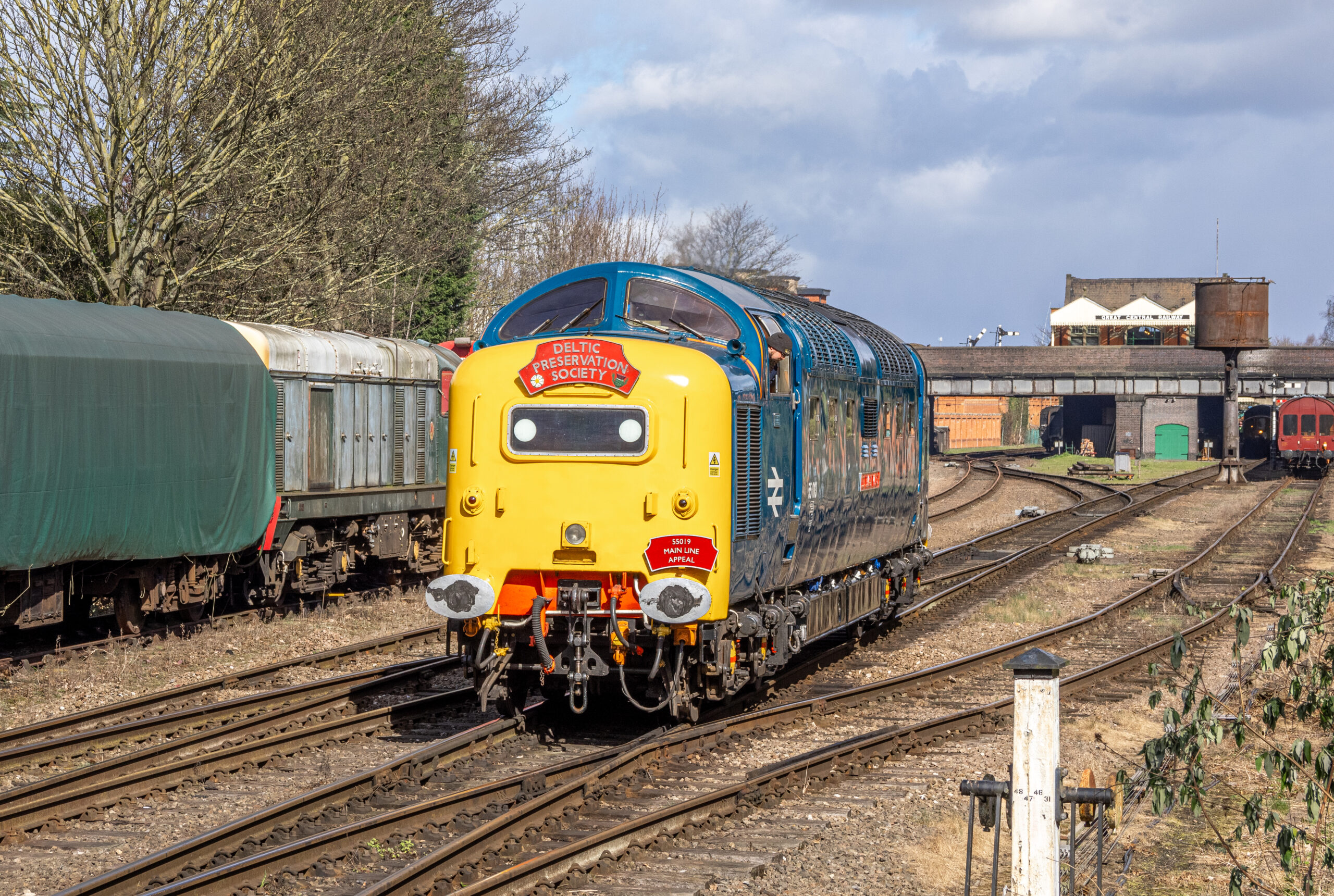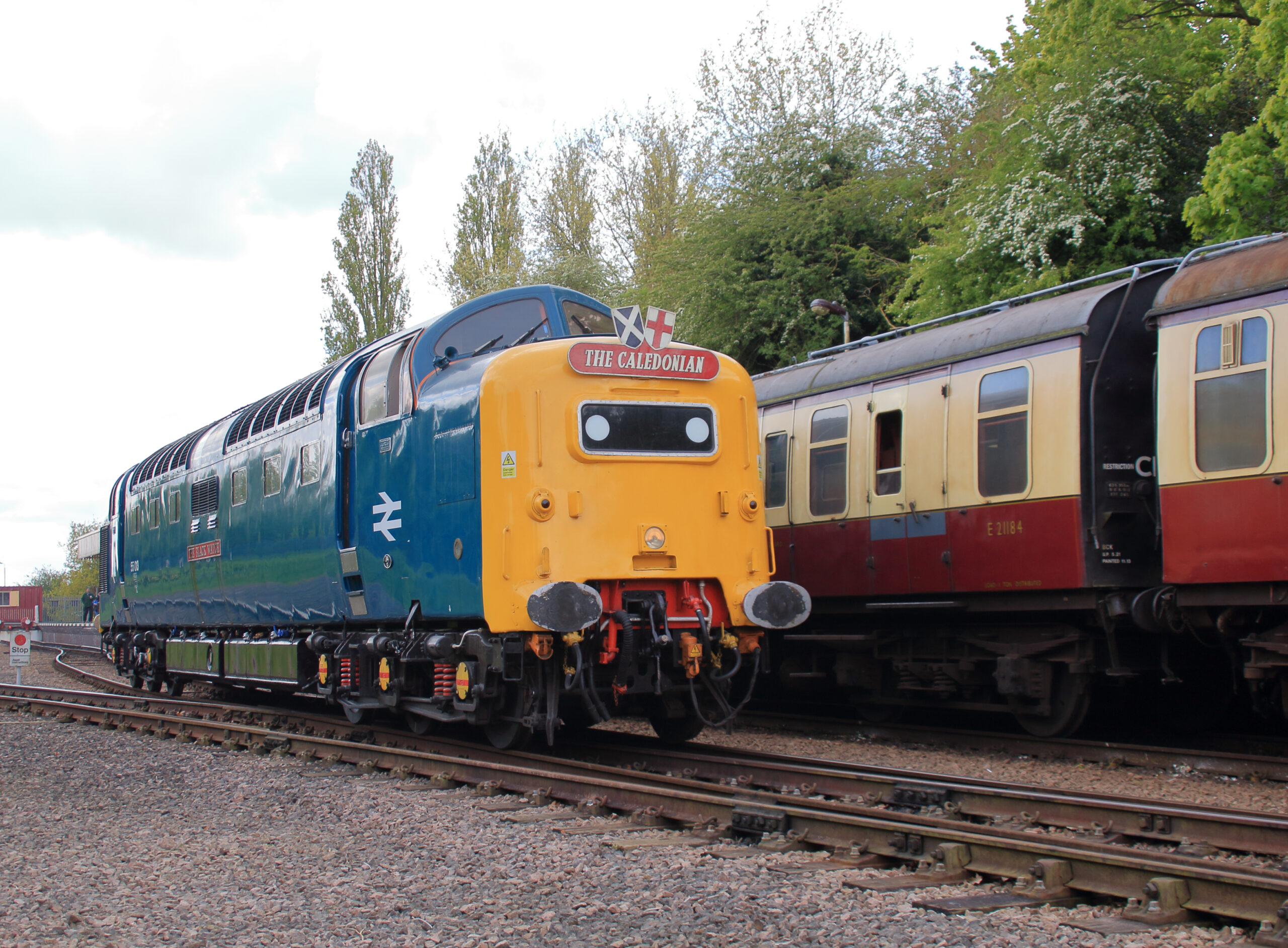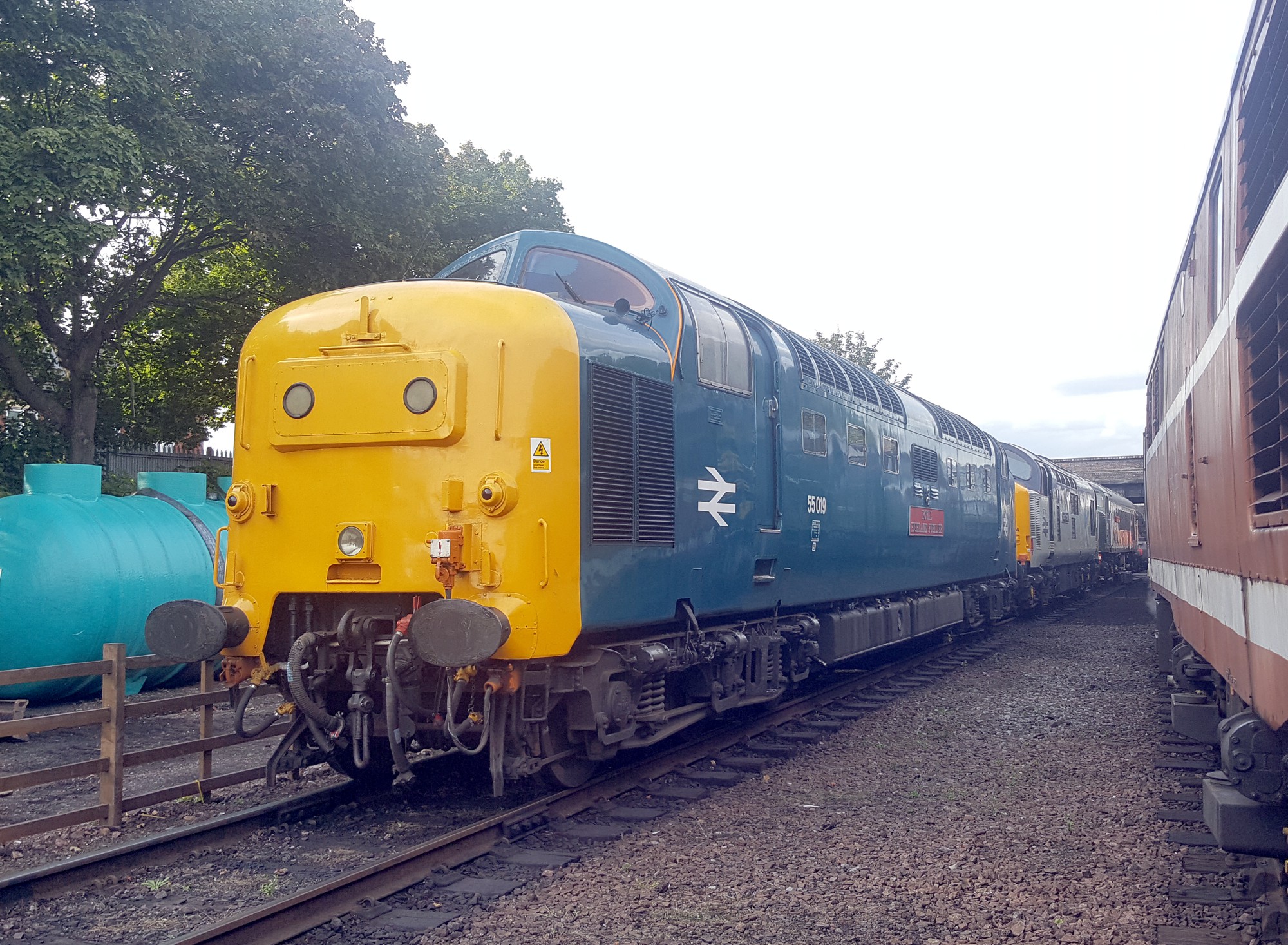
Class 55 55019 Royal Highland Fusilier
One of three Class 55 Deltic locomotives owned by the charitable organisation, the Deltic Preservation Society, 55019 dates from entry into BR service on 11th December, 1961. It cost £156,000 when new from English Electric’s Vulcan Foundry Works at Newton-le-Willows. The fleet of 22 locomotives, deservedly dubbed ‘The King of Diesels’ was split between three depots for maintenance, although administered from the Eastern Region, later merged with the North Eastern Region in 1967.
When new, it was numbered D9019 and was un-named. It was allocated to Haymarket depot depot, Edinburgh.
The Scottish Region followed the long tradition of naming its Deltics after Regiments and D9019 was bestowed with the name Royal Highland Fusilier at a ceremony at Glasgow Central on 11th September 1965.
The advent of air-braking in the late 1960s saw this Deltic fitted with air brake equipment at Doncaster Works, being outshopped on 10th November 1967.
By now, the corporate BR blue era had arrived and D9019 lost its two-tone green livery, to be replaced by all-over BR Blue, the locomotive debuting in this guise after a visit to Doncaster Works in April 1968.
The introduction of Electric Train Heat rolling stock saw the whole of the Deltic fleet and many other locomotives converted to provide power for this facility, D9019 being so modified on 24th April 1971.
The introduction of TOPS, the BR computer system, Total Operations Processing System saw every locomotive given a class number, the Deltics being classified 55. Thus D9019 assumed its new TOPS number of 55019 in November 1973.
The 1970s saw BR’s InterCity sector striving the decrease journey times, with particular emphasis on attracting the business clientele. The East Coast route saw several speed-restricted locations vastly improved, eg Newton Hall and Peterborough. By the late 1970s, a Deltic was rostered for Britain’s fastest train, the ‘Hull Executive’. 55019 was often let loose on this exacting schedule of an average of 91.4mph between King’s Cross and the first stop at Retford. Invariably, speeds of over 100mph were attained.
By now, however, the High Speed Train (HST) was spelling the end of the Deltics’ reign. HST operation on the East Coast Main Line started in March 1978.
The first two Class 55 were officially condemned on 6th January 1980 – the end was in sight.
55019 lasted until the very end. In fact, it had the unfortunate distinction of working the last Deltic-hauled service train – the 1E26 16.30 Aberdeen (from Edinburgh) to York on 31st December, 1981. Withdrawn by York depot on arrival, 55019 was later towed to Doncaster Works and placed in the scrapline. It had run 3.25 million miles.
‘Tis now the death Class fifty-five
The cutter’s torch you won’t survive
Your operation is unmarred
Standing in the breaker’s yard
However a second life for 55019 beckoned. Such was the phenomenal interest in the Deltics up to and after their withdrawal that the DPS, formed in 1977, accumulated enough funds to make a bid for two Deltics. This it did, offering £15,500.9 for 55009 Alycidon and 15,501.9 for 55019 Royal Highland Fusilier. The bid was successful and the two Deltics, later to be joined by 55015 Tulyar, embarked on a preservation career.
Initially the two Deltics were based on the North Yorkshire Moors Railway, but 55019 was later moved to the Great Central Railway and then the East Lancashire Railway.
55019 has been most reliable over many years. Indeed, it still has one of its Napier power units which was in it when the locomotive was withdrawn. This is indicative of the extraordinary efforts of the DPS volunteers in preparing the locomotive before it is run, such as barring over the engine and priming the oil by hand.
The DPS has an agreement with the Great Central Railway where the society will endeavour to have one of its Deltics based on this pro-diesel heritage railway. This will allow enthusiasts and the general public to continue to savour the magnificent sound of a Napier two-stroke 18-cylinder opposed piston unit in action and to ride behind one of the country’s finest examples of British railway engineering at its best.
Do please look at the DPS website for all manner of facts, history and how to join the society – www.thedps.co.uk
Loco Numbers
Class 55 – 55019
Built
By English Electric
Power Output
3,300 bhp (≈2,460 kW at engine; ~2,650 hp at rail)
Max Speed
100 mph (25mph on heritage railways)
Year of Manufacture
1962
Nickname (Loco)
Royal Highland Fusilier
Weight
99 tons
Tractive Effort
Max ~50,000 lbf
Driving Wheel Diameter
3 ft 10 inches